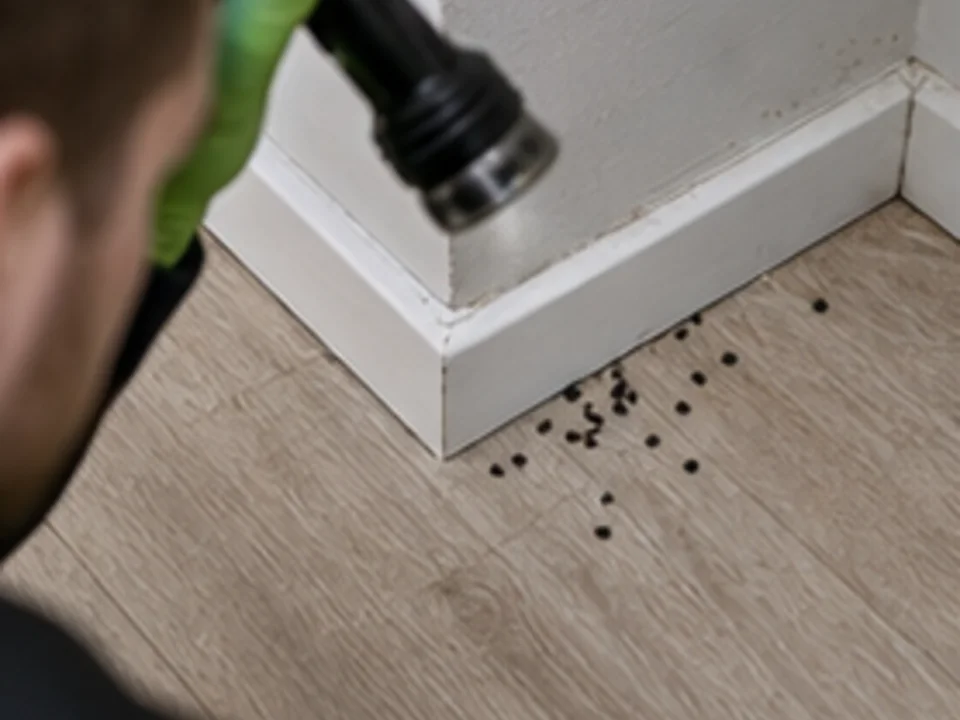
Describe the signs
Tell us what you have noticed, where it is happening and when it started.
rodents
Small gaps can be enough for mice to enter. Start with an assessment of the signs and likely access points.
What to look for
These signs are a starting point, not a confirmed identification. Contact Pest Direct if you are unsure.
Understanding the problem
Mice can enter through small structural gaps and settle close to warmth, food and nesting material. Their droppings, greasy marks, damaged packaging and night-time sounds often appear before a mouse is seen, so the pattern of evidence matters when deciding where to inspect.
Where signs may appear
Kitchens, airing cupboards, loft insulation, boxed-in pipework and storage rooms are common places to check. In flats, terraces and commercial buildings, shared walls and service voids may connect several areas. The most visible room is not always the original entry point.
Next steps
Tell us what you have noticed, where it is happening and when it started.
The pest, likely source and suitable next step are considered.
Inspection, treatment or proofing options are explained before work begins.
Practical prevention advice is provided where it is relevant.
Before an assessment
Note where droppings and damage are concentrated and whether noises happen at a regular time. Store open food securely, leave established signs visible where safe, and avoid moving potentially contaminated boxes between rooms. Tell Pest Direct about pets, children and difficult access before a visit is arranged.
Longer-term protection
A practical mouse-control plan can combine monitoring, targeted control, food-source reduction and proofing of suitable access points. Pipe penetrations, damaged vents, door gaps and poorly sealed cupboards may all need attention once active routes have been identified.
Questions
Share the signs you have found and where they occur. Pest Direct can help decide whether an inspection or another next step is appropriate.
Usually it is better to avoid disturbing nests, droppings, harbourage or entry points before asking for advice, as these signs can help with assessment.
A single sighting does not confirm the size of the problem. Droppings, noise, damage and monitoring evidence help establish whether activity is isolated or more established.
Local coverage
Check the closest service-area page, or send your postcode for a direct coverage check.
Related services